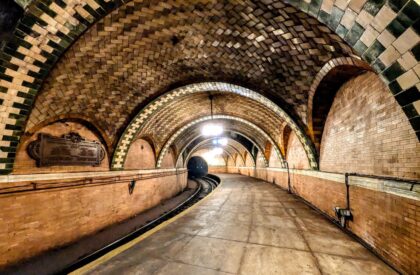
The Old City Hall station is a historic subway station in New York City, renowned for its architectural beauty and historical significance. Completed in 1904, it served as the original southern terminus of the IRT subway line and remained in operation until 1945. Today, the station is no longer in regular service, but it can still be visited through special tours organized by the New York Transit Museum.
During its years of operation, the Old City Hall station was celebrated for its elegant design, featuring high arched ceilings, decorative tile work, and vintage lighting fixtures that reflected the early 20th-century subway aesthetic. Its architecture was a stark contrast to the more utilitarian stations built later, making it a favorite among transit enthusiasts and historians.
After its closure in 1945, the station was preserved in its original state, with many of its historic features intact. However, due to safety concerns and the expansion of the subway system, the station was sealed off from the public. Despite this, the station's platform and some of its original design elements remain accessible through guided tours, which are highly sought after by those interested in transit history and architecture.
To visit the Old City Hall station, visitors must obtain tickets from the New York Transit Museum, which organizes special trips that include a walk-through of the station. These tours provide a rare glimpse into the early days of New York City’s subway system and allow visitors to appreciate the craftsmanship and design that characterized the original stations.
Located in the Tribeca neighborhood, the station is a short walk from other historic sites and modern attractions, making it a perfect stop for those interested in exploring the city’s rich history. The experience offers a unique opportunity to step back in time and see a piece of New York City’s transit heritage that is usually hidden from view.
Overall, the Old City Hall station stands as a testament to the city’s engineering and architectural ingenuity during the early 20th century. Its preservation and the tours offered by the Transit Museum ensure that future generations can continue to appreciate this iconic piece of New York’s transportation history.